Shea Butter for Eczema: A Natural Solution
Eczema is a common skin condition characterized by inflammation, itching, and redness. It can significantly impact the daily life and well-being of those who suffer from it. While various medical treatments are available, many people turn to natural remedies for relief. One such natural remedy is shea butter.
What is Shea Butter ?
Shea butter is a fat extracted from the nuts of the shea tree (Vitellaria paradoxa), which is native to Africa. It has been used in skincare for centuries for its moisturizing and healing properties. The butter is rich in fatty acids and vitamins, including vitamins A, E, and F, all of which are beneficial for the skin.
How does Shea Butter work for Eczema?
Hydration : Eczema is often accompanied by dry skin. Shea butter is an excellent moisturizer that penetrates deeply into the skin and provides long-lasting hydration. This helps strengthen the skin barrier and prevent moisture loss.
Anti-inflammatory : Shea butter contains cinnamic derivatives, which have anti-inflammatory properties. This can help reduce the inflammation and redness associated with eczema.
Itch Relief : The soothing properties of shea butter can help reduce itching, which is one of the most bothersome symptoms of eczema.
Skin repair : Thanks to its high concentration of vitamins A and E, shea butter promotes skin repair and can help reduce scars and skin damage that can be caused by scratching.
Uses of Shea Butter for Eczema
Unfortunately, I (owner of Lilii Flora) have a son who developed eczema soon after birth. We tried everything and went to the hospital for help. The only thing that helped was hormone cream, but we preferred not to use it.
We continued our search for natural skincare and tried our shea butter . We quickly got the eczema under control, and he was soon symptom-free.
This is how we managed to get his eczema under control:
- We applied the cream several times a day to his skin, keeping it oily throughout the day and preventing the eczema from drying out further. The shea butter also provided a protective layer on his skin.
- Whenever he showered/bathed/swimmed, we would rub shea butter into the weak, dry spots to protect them from the (pool) water.
- Once the eczema was under control, we applied the cream morning and evening. We wanted to continue caring for his skin to prevent the eczema from returning. When his immune system was lower and we noticed his skin was drying out more quickly, we made sure we applied the shea butter more frequently to combat the eczema.
Shea butter or raspberry ointment for eczema?
Benefits of Shea Butter for Eczema:
- Deep Hydration : Shea butter penetrates deeply into the skin, providing long-lasting hydration, essential for restoring dry skin often associated with eczema.
- Anti-inflammatory : Contains cinnamic derivatives that can reduce inflammation and redness.
- Itch Relief : The soothing properties help reduce itching, which is one of the most uncomfortable symptoms of eczema.
- Skin repair : Rich in vitamins A and E, which help repair the skin and reduce scars.
What is Raspberry Ointment?
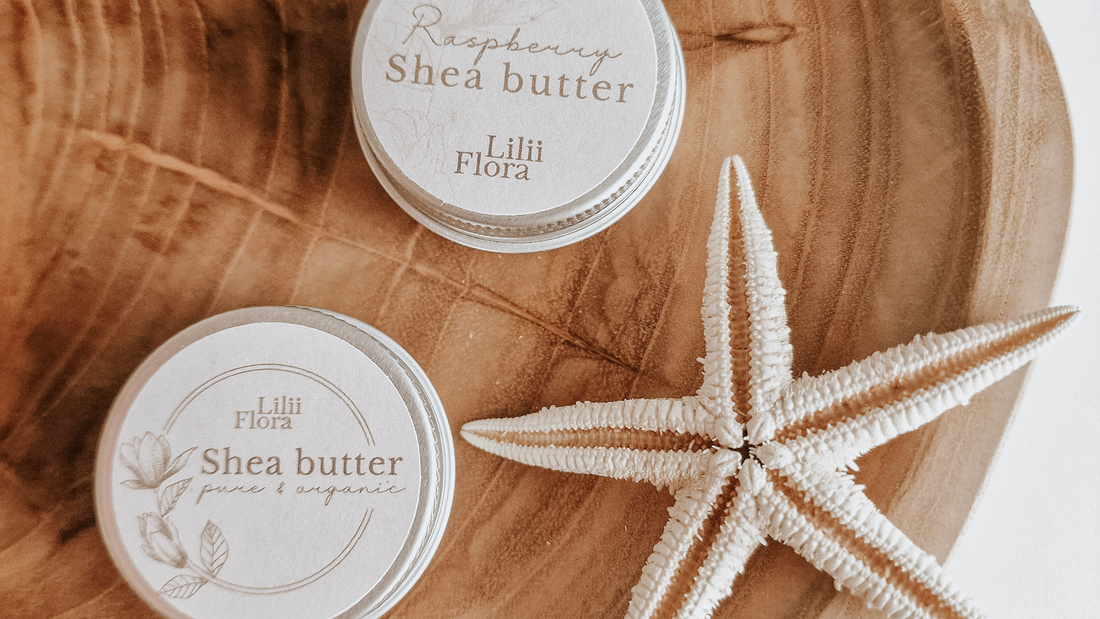
Raspberry ointment is often made with raspberry seed oil, an oil extracted from the seeds of raspberries. This oil is rich in antioxidants and essential fatty acids. It is added to the shea butter.
Benefits of Raspberry Ointment for Eczema:
- Antioxidant-rich : Contains high levels of vitamin E and polyphenols that fight free radicals and protect the skin.
- Omega Fatty Acids : Rich in omega-3 and omega-6 fatty acids, which can help restore the skin barrier and reduce inflammation.
- UV protection : Provides natural protection against UV rays, which can be useful for people with eczema who are sensitive to sunlight.
- Soothing : Has soothing properties that calm the skin and reduce irritation.
Which is Better for Eczema?
Both products have their unique benefits for treating eczema, and the choice between shea butter and raspberry ointment depends on the user's specific needs and preferences.
Shea butter may be preferred if you:
- Have very dry skin that needs intensive hydration.
- Are you looking for a product that is readily available and traditionally used for skin problems?
- Prefers a thick, creamy texture.
Raspberry ointment may be preferred if you:
- Prefer a lighter product that is quickly absorbed.
- Want extra antioxidants and natural UV protection for your skin?
- Are you looking for a product with a high content of essential fatty acids?
Combination of Both
For optimal results, consider using both shea butter and raspberry ointment in your skincare routine. For example, you could use shea butter at night for deep hydration and raspberry ointment during the day for protection and inflammation relief. By utilizing the combined benefits of both products, you may be able to achieve better relief from eczema symptoms.
Conclusion
Both shea butter and raspberry ointment offer valuable benefits for treating eczema. While shea butter can provide deep hydration and skin repair, raspberry ointment provides antioxidants and essential fatty acids for anti-inflammatory and protective effects. Experiment with both to find which works best for your skin, and consider combining them to maximize the benefits of both. Natural remedies can be an effective addition to your skincare routine and contribute to healthy, calm skin.
While it's not a replacement for medical treatments, it can certainly help manage symptoms and keep your skin healthy. Give it a try and discover how this natural butter can help soothe and restore your skin.